An input list that matches the plot.
Give the engineer a clear source and connection for every channel.
Start with an example, then change the inputs and monitor mixes to match your band. Stage left and stage right are from the performers’ perspective.
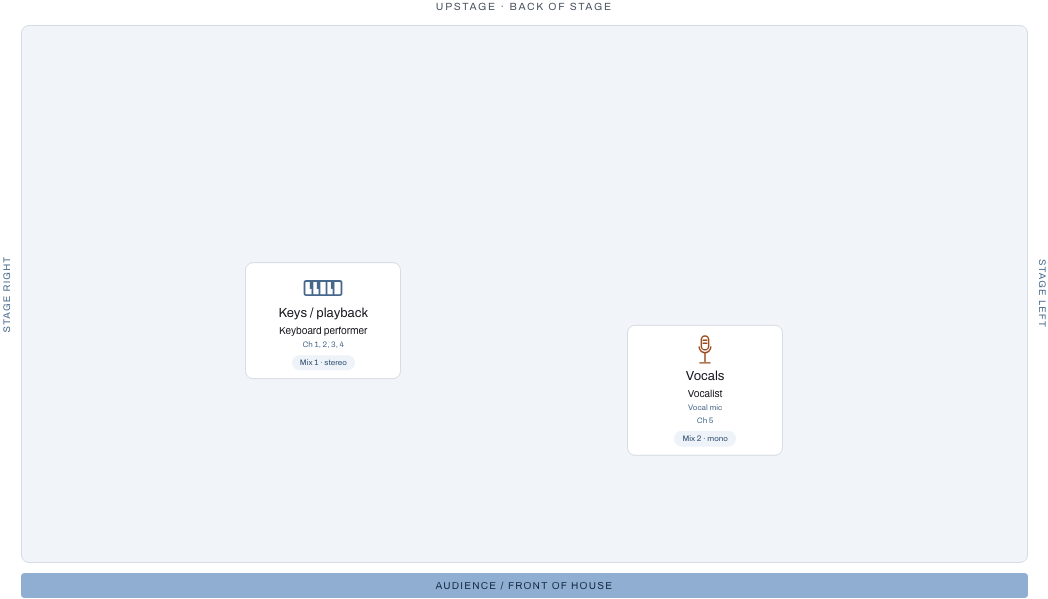
A channel list you can edit.
Each CSV uses the editor’s source, performer, mic_di, stand, phantom, provided_by, notes, crowd, pair and side columns. Keep pair values equal across an adjacent left/right pair. Leave optional text blank when it is unknown; confirm it before the advance.
Import without losing your draft.
- Open a matching starter in the stage plot maker, so performer names already exist.
- Edit the CSV in your spreadsheet, then export CSV or TSV under 64 KiB.
- Open Import inputs, choose append or replace, and preview the rows. Map any unfamiliar headers and resolve performer matches.
- Review channel counts and warnings before applying. Reorder linked pairs together and confirm each performer’s channels on the diagram.
- Print the matching plot and input list on Letter or A4. Confirm microphones, stands, phantom power and monitor outputs with the house engineer.
Crowd microphones are labelled for IEM mixes only. A stereo channel pair and a stereo monitor mix describe different connections; check both.
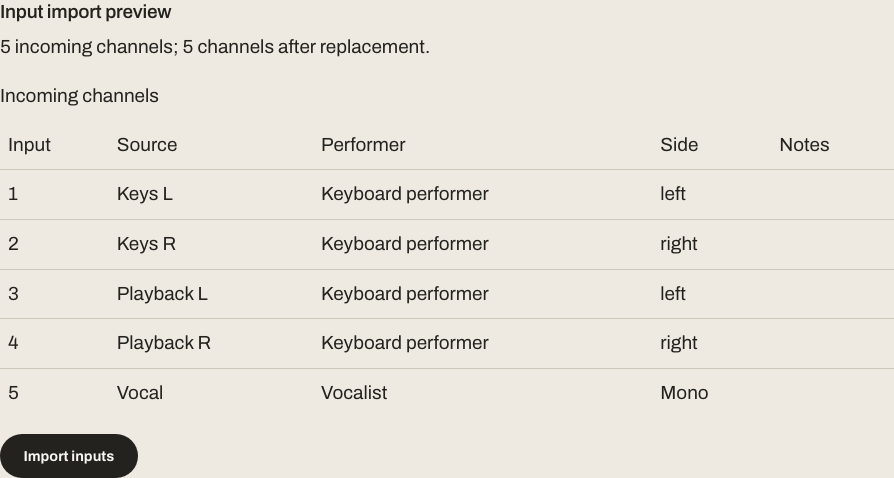
Check the preview before applying.
A successful preview shows each source, performer and stereo side. Resolve mapping errors and confirm the append or replace count before the import changes your draft.
Free drafts and the saved-show package.
Print clean stage and rehearsal documents without a subscription. Live Show Plus combines saved stage variants, repertoire, setlists, frozen show packs and venue links. The approved target is $29/year or $5/month, included with Unlimited.
Saved-show starter access and paid checkout are awaiting release. The package covers live-show tools; mastering, AI artwork credits and paid release-planner features use their own access.